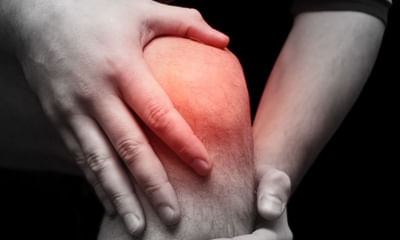
My Knee Hurts When I Put Pressure On It
Hello my name is kane richardson i'm a 23 year old male in kansas city missouri and I have a bit of a hip problem or so ...


Ask Free Question
Your query is very big please make summary so that I can guide you check vit d3 and vit b12 revert me reports.



Im 16 years old I have got a knee pain for the past 5 weeks I took calcium and vitamin d3 as I thought it was from lack ...

Ask Free Question
Risk factor a combination of factors may contribute to the development of patellar tendinitis, including: physical activity. Running and jumping are most commonly associated with patellar tendinitis. Sudden increases in how hard or how often you engage in the activity also add stress to the tendon, as can changing your running shoes. Tight leg muscles. Tight thigh muscles (quadriceps) and hamstrings, which run up the back of your thighs, can increase strain on your patellar tendon. Muscular imbalance. If some muscles in your legs are much stronger than others, the stronger muscles could pull harder on your patellar tendon. This uneven pull could cause tendinitis. Chronic illness. Some illnesses disrupt blood flow to the knee, which weakens the tendon. Examples include kidney failure, autoimmune diseases such as lupus or rheumatoid arthritis and metabolic diseases such as diabetes. Complications if you try to work through your pain, ignoring your body's warning signs, you could cause increasingly larger tears in the patellar tendon. Knee pain and reduced function can persist if you don't tend to the problem, and you may progress to the more serious patellar tendinopathy. Prevention to reduce your risk of developing patellar tendinitis, take these steps: don't play through pain. As soon as you notice exercise-related knee pain, ice the area and rest. Until your knee is pain-free, avoid activities that put stress on your patellar tendon. Strengthen your muscles. Strong thigh muscles are better able to handle the stresses that can cause patellar tendinitis. Eccentric exercises, which involve lowering your leg very slowly after extending your knee, are particularly helpful. Improve your technique. To be sure you're using your body correctly, consider taking lessons or getting professional instructions when starting a new sport or using exercise equipment. Therapy a variety of physical therapy techniques can help reduce the symptoms associated with patellar tendinitis, including: stretching exercises. Regular, steady stretching exercises can reduce muscle spasm and help lengthen the muscle-tendon unit. Don't bounce during your stretch. Strengthening exercises. Weak thigh muscles contribute to the strain on your patellar tendon. Exercises that involve lowering your leg very slowly after extending it can be particularly helpful, as can exercises that strengthen all of the leg muscles in combination, such as a leg press. Patellar tendon strap. A strap that applies pressure to your patellar tendon can help to distribute force away from the tendon and direct it through the strap instead. This may help relieve pain. Iontophoresis. This therapy involves spreading a corticosteroid medicine on your skin and then using a device that delivers a low electrical charge to push the medication through your skin. Platelet-rich plasma injection. This type of injection has been tried in some people with chronic patellar tendon problems. Studies are ongoing. It is hoped the injections might promote new tissue formation and help heal tendon damage.
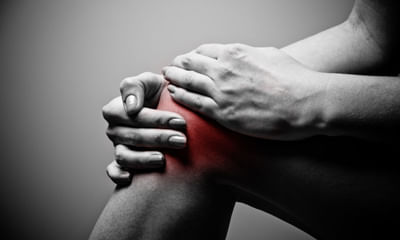
HI, I twisted my knee the other day and it is real swollen hot and it hurts to put pressure on it. What should I do for ...

Ask Free Question
est: Take it easy for a few days. ... Ice: Put an ice pack on your knee about 3 to 4 times a day. ... Medicate: Take a mild, over-the-counter anti-inflammatory drug like ibuprofen or naproxen sodium. Elevate: Prop up the sore knee while you rest on the couch.
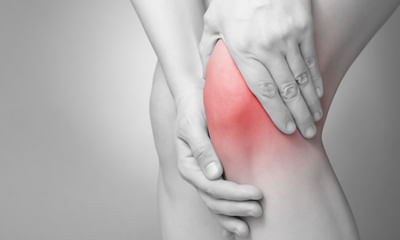
I am an 18 years old, that recently tripped and scraped my leg on a wooden bed post. The scrape has already healed and s ...
Ask Free Question
Leg PainIf you have leg pain then you have to rule out the casues for having leg pain. First of all check your weight and your haemoglobin levels, as Anaemia always leads to the symptoms of being tired and also having leg pain though there are no issues with the knee joint or back pain. If not if the pain radiates down the back of thigh and legs then it might be due to sciatica. Kindly consult the nearby physiotherapist. Hope you recover soon from the leg pain. Pain in the back while walking and standing Pain in the right legIf you have leg pain pls check your body weight and your haemoglobin levels, as Anaemia always leads to the symptoms of being tired and also having leg pain though there may not be any pathological reasons for back pain. My suggestion would be to wear MCR Chappals which will help you to prevent the weight falling on the If you have back pain while walking and standing first of all check your weight and your haemoglobin levels, as Anaemia always leads to the symptoms of being tired and also having back pain though there may not be any pathological reasons for back pain. My suggestion would be to wear MCR Chappals which will help you to prevent the weight falling on the back. Back. And also should check whether you have flat foot on the right leg that also might be the reason to have pain in one particular leg Pain in the left side of the leg/thigh The compression of the sciatic nerve should be around the right side that's the reason you have pain in the left side. That's the reason you cannot sit or stand and it is exactly around the L5 vertebrae where the sciatic nerve passes by.
Hi, My knee has been hurting for two weeks. It only hurts when I put pressure on it or walk on it. How do I know if I to ...
Ask Free Question
Knee Pain: As arthritis is very common that you get generally bilaterally. Ice therapy would definitely help to reduce the inflammation. We also advise you to use knee cap which would help to prevent the knee from damaging further and also to maintain the quadriceps muscle tone. Simple Knee ExerciesSpecific knee exercises will also help ie. Keeping ball underneath the knee and keep pressing it. That's the simple exercise which will help you to strengthen the knee Ice therapy would definitely help to reduce the inflammation. We also advise you to use knee cap which would help to prevent the knee from damaging further and also to maintain the quadriceps muscle tone. I also advise you to use knee cap which would help to prevent the knee from damaging further and also to maintain the quadriceps muscle tone. Knee pain more than 2 weeks:if your knee is paining since 2 weeks, then you have to rethink whether you had any injury in the previous years. I also advise you to use knee cap which would help to prevent the knee from damaging further and also to maintain the quadriceps muscle tone. As arthritis is very common if anyone would've neglected any injury in the previous years. You can take Ultrasonic therapy in one of the nearby physiotherapy clinics which would help to heal the damaged cartilages along with shortwave diathermy which would help to improve the blood circulation. Ice therapy would definitely help to reduce the inflammation.
My age is 18 have a backache since yesterday due to improper way of doing sit ups. Please suggest a remedy. ...

Ask Free Question
Dear lybrate-user Stop exercises that hurts your back Take some rest Apply hot fomentation over your back Try to acquire a proper posture Tc.
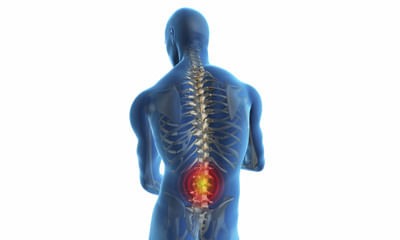
I fell down the stairs two days ago, but I was close to the bottom, so I probably only fell down about 3 or 4 stairs and ...

Ask Free Question
A good way to diffuse general body pains: 1.take a long hot bath in water in which a few cups of Epsom salts have been added. 2.If you suspect your body and pains are due to stress-get plenty of sleep and try to reduce or eliminate the cause of your stress. 3.Meditation, deep breathing and yoga.
Hi I want to know that I have severe pain in my right knee whenever I sit in washroom my knee hurts very badly I can not ...

Ask Free Question
Dear Lybrate user there is possibility of muscle or ligament tissue damage. Don't put more pressure over knee joint. Avoid cross leg sitting, avoid more standing, walking,running and other strenuous works & exercises. Take cap Arjit forte 1-1-1 for 15 days. Apply susandhi liniment twice day. Wear knee cap often. Massage with mahanarayan tail followed by hot water bath.
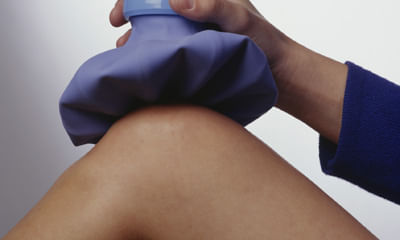
My dad is 50 years and age and he is having severe back pain in his lower back so can you please advise what treatment c ...

Ask Free Question
This form of low back pain is amplified with periods of stress, poor posture, weak abdominals and/or excessive body weight. There are many exercises that should be performed to address the issue of back pain. These exercises try to relieve both the tightness and imbalances in the lumbar spine. Please consult a Physiotherapist privately to learn these exercises. Here are a few simple tips to try at home: -heat therapy can provide both pain relief and healing benefits for many types of lower back pain. Try use heat therapy in form of heating pads, heat wraps, hot baths, etc. -Keep moving and keep your back mobile. -Stretch. Don't sit slumped in your desk chair all day. Get up every 20 minutes or so and stretch the other way. Because most of us spend a lot of time bending forward in our jobs, it's important to stand up and stretch backward throughout the day. -Think ergonomically. Design your workspace so you don't have to hunch forward to see your computer monitor or reach way out for your mouse. Use a desk chair that supports your lower back and allows you to keep your feet planted firmly on the floor. -Watch your posture. Slumping makes it harder for your back to support your weight. Be especially careful of your posture when lifting heavy objects. Never bend over from the waist. Instead, bend and straighten from the knees. -Watch your weight. Use diet and exercise to keep your weight within a healthy range for your height. Being overweight puts excess stress on your spine. Go and see a Doctor if -Your low back pain is severe, doesn't go away after a few days, or it hurts even when you're at rest or lying down. You have weakness or numbness in your legs, or you have trouble standing or walking. You lose control over your bowels or bladder. These could be signs that you have a nerve problem or another underlying medical condition that needs to be treated.
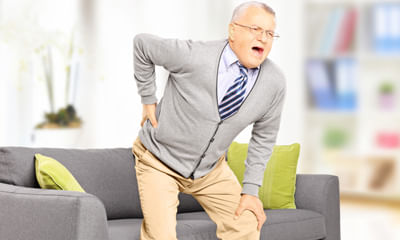
Pain in left knee. Not able to put pressure on left knee. Xray of knee is normal. Two years ago met with an accident in ...

Ask Free Question
If there is no fracture in x-ray you should definitely go with a mri. Since you are not able to give w8 on your knee it can be acl (ligament) injury or meniscal injury too. To make a diagnosis both mri and physical tests need to be performed on you. I would suggest you to go to an orthopedic doctor 1st and then to physiotherapist. I hope I helped you. Thank you!