

Fibroids In Stomach Symptoms
Hi, A person (female) is suffering from metastatic leiomyosarcoma as per diagnosis. She underwent surgery for fibroids i ...


Ask Free Question
Change diet and lifestyle completely you have to take some supplements which will boost immunity more detailed reports needed -like staging, medicines used, all lab test results take a consult.
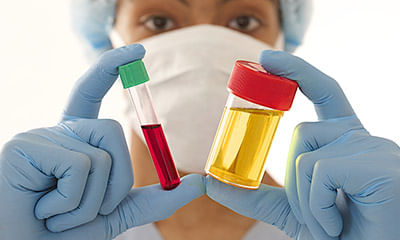


Total RBC-6.21,Hemoglobin 12.4 ,MCV -68.4 ,MCH -20 ,MCHC -29.2, RDW-CV 18.6 and Thyroid stimulating hormone (TSH)-7.39 s ...

Ask Free Question
You have mild iron deficiency anemia Anaemia occurs when you have a decreased level of hemoglobin in your red blood cells (RBCs). Hemoglobin is the protein in your RBCs that is responsible for carrying oxygen to your tissues. Iron deficiency anemia is the most common type of anemia, and it occurs when your body doesn’t have enough of the mineral iron. Your body needs iron to make hemoglobin. When there isn’t enough iron in your blood stream, the rest of your body can’t get the amount of oxygen it needs. While the condition may be common, many people don’t know they have iron deficiency anaemia. It’s possible to experience the symptoms for years without ever knowing the cause. In women of childbearing age, the most common cause of iron deficiency anaemia is a loss of iron in the blood due to heavy menstruation or pregnancy. A poor diet or certain intestinal diseases that affect how the body absorbs iron can also cause iron deficiency anaemia Iron Deficiency Anemia Symptoms Causes Risk factors Diagnosis Anemia in women Complications Treatment Prevention Outlook What is iron deficiency anemia? Anemia occurs when you have a decreased level of hemoglobin in your red blood cells (RBCs). Hemoglobin is the protein in your RBCs that is responsible for carrying oxygen to your tissues. Iron deficiency anemia is the most common type of anemia, and it occurs when your body doesn’t have enough of the mineral iron. Your body needs iron to make hemoglobin. When there isn’t enough iron in your blood stream, the rest of your body can’t get the amount of oxygen it needs. While the condition may be common, many people don’t know they have iron deficiency anemia. It’s possible to experience the symptoms for years without ever knowing the cause. In women of childbearing age, the most common cause of iron deficiency anemia is a loss of iron in the blood due to heavy menstruation or pregnancy. A poor diet or certain intestinal diseases that affect how the body absorbs iron can also cause iron deficiency anemia. Doctors normally treat the condition with iron supplements or changes to diet. SYMPTOMS Symptoms of iron deficiency anemia The symptoms of iron deficiency anemia can be mild at first, and you may not even notice them. According to the American Society of Hematology (ASH), most people don’t realize they have mild anemia until they have a routine blood test. The symptoms of moderate to severe iron deficiency anemia include: general fatigue weakness pale skin shortness of breath dizziness strange cravings to eat items that aren’t food, such as dirt, ice, or clay a tingling or crawling feeling in the legs tongue swelling or soreness cold hands and feet fast or irregular heartbeat brittle nails headaches CAUSES Causes of iron deficiency anemia According to the ASH, iron deficiency is the most common cause of anemia. There are many reasons why a person might become deficient in iron. These include: Inadequate iron intake Eating too little iron over an extended amount of time can cause a shortage in your body. Foods such as meat, eggs, and some green leafy vegetables are high in iron. Because iron is essential during times of rapid growth and development, pregnant women and young children may need even more iron-rich foods in their diet. Pregnancy or blood loss due to menstruation Heavy menstrual bleeding and blood loss during childbirth are the most common causes of iron deficiency anemia in women of childbearing age. Internal bleeding Certain medical conditions can cause internal bleeding, which can lead to iron deficiency anemia. Examples include an ulcer in your stomach, polyps in the colon or intestines, or colon cancer. Regular use of pain relievers, such as aspirin, can also cause bleeding in the stomach. Read more: Learn about cytopenia and anemia's relationship » Inability to absorb iron Certain disorders or surgeries that affect the intestines can also interfere with how your body absorbs iron. Even if you get enough iron in your diet, celiac disease or intestinal surgery such as gastric bypass may limit the amount of iron your body can absorb. RISK FACTORS Risk factors Anemia is a common condition and can occur in both men and women of any age and from any ethnic group. Some people may be at greater risk of iron deficiency anemia than others, including: women of childbearing age pregnant women people with poor diets people who donate blood frequently infants and children, especially those born prematurely or experiencing a growth spurt vegetarians who don’t replace meat with another iron-rich food If you’re at risk of iron deficiency anemia, talk to your doctor to determine if blood testing or dietary changes could benefit you. DIAGNOSIS How it’s diagnosed A doctor can diagnose anemia with blood tests. These include: Complete blood cell (CBC) test A complete blood count (CBC) is usually the first test a doctor will use. A CBC measures the amount of all components in the blood, including: red blood cells (RBCs) white blood cells (WBCs) hemoglobin hematocrit platelets The CBC provides information about your blood that is helpful in diagnosing iron deficiency anemia. This information includes: the hematocrit level, which is the percent of blood volume that is made up of RBCs the hemoglobin level the size of your RBCs A normal hematocrit range is 34.9 to 44.5 percent for adult women and 38.8 to 50 percent for adult men. The normal hemoglobin range is 12.0 to 15.5 grams per deciliter for an adult woman and 13.5 to 17.5 grams per deciliter for an adult man. In iron deficiency anemia, the hematocrit and hemoglobin levels are low. Also, RBCs are usually smaller in size than normal. A CBC test is often performed as part of a routine physical examination. It’s a good indicator of a person’s overall health. It may also be performed routinely before a surgery. This test is useful to diagnose this type of anemia because most people who have an iron deficiency don’t realize it. Other tests Anemia can usually be confirmed with a CBC test. Your doctor might order additional blood tests to determine how severe your anemia is and help determine treatments. They may also examine your blood through a microscope. These blood tests will provide information, including: the iron level in your blood your RBC size and color (RBCs are pale if they’re deficient in iron) your ferritin levels your total iron-binding capacity (TIBC) Ferritin is a protein that helps with iron storage in your body. Low levels of ferritin indicate low iron storage. A TIBC test is used to determine the amount transferrin that’s carrying iron. Transferrin is a protein that transports iron. Tests for internal bleeding If your doctor is concerned that internal bleeding is causing your anemia, additional tests may be needed. One test you may have is fecal occult test to look for blood in your feces. Blood in your feces may indicate bleeding in your intestine. Your doctor may also perform an endoscopy, in which they use a small camera on a flexible tube to view the linings of your gastrointestinal tract. An EGD test, or upper endoscopy, allows a doctor to examine the lining of the esophagus, stomach, and the upper part of the small intestine. A colonoscopy, or lower endoscopy, allows a doctor to examine the lining of the colon, which is the lower portion of the large intestine. These tests can help identify sources of gastrointestinal bleeding. ANEMIA IN WOMEN Iron deficiency anemia in women Pregnancy, significant menstrual bleeding, and uterine fibroids are all reasons why women are more likely to experience iron deficiency anemia. Heavy menstrual bleeding occurs when a woman bleeds more or longer than women typically bleed during menstruation. According to the Centers for Disease Control and Prevention, typical menstrual bleeding lasts for 4 to 5 days and the amount of blood lost ranges from 2 to 3 tablespoons. Women with excess menstrual bleeding typically bleed for more than seven days and lose twice as much blood as normal. According to the National Heart, Lung, and Blood Institute, an estimated 20 percent of women of childbearing age have iron deficiency anemia. Pregnant women are even more likely to have iron deficiency anemia because they require greater amounts of blood to support their growing babies. A pelvic ultrasound can help a doctor look for the source of excess bleeding during a woman’s period, such as fibroids. Like iron deficiency anemia, uterine fibroids often don’t cause symptoms. They occur when muscular tumors grow in the uterus. While they’re not usually cancerous, they can cause heavy menstrual bleeding that can lead to iron deficiency anemia. COMPLICATIONS Health complications of iron deficiency anemia Most cases of iron deficiency anemia are mild and don’t cause complications. The condition can usually be corrected easily. However, if anemia or iron deficiency is left untreated, it can lead to other health problems. These include: Rapid or irregular heartbeat When you’re anemic, your heart has to pump more blood to make up for the low amount of oxygen. This can lead to irregular heartbeat. In severe cases, it can lead to heart failure or an enlarged heart. Pregnancy complications In severe cases of iron deficiency, a child may be born prematurely or with a low birth weight. Most pregnant women take iron supplements as part of their prenatal care to prevent this from happening. Delayed growth in infants and children Infants and children who are severely deficient in iron may experience delayed growth and development. They may also be more prone to infections. TREATMENT Treatment options Iron supplements Iron tablets can help restore iron levels in your body. If possible, you should take iron tablets on an empty stomach, which helps the body absorb them better. If they upset your stomach, you can take them with meals. You may need to take the supplements for several months. Iron supplements may cause constipation or black stools. Diet Diets that include the following foods can help treat or prevent iron deficiency: red meat dark green, leafy vegetables dried fruits nuts iron-fortified cereals Additionally, vitamin C helps your body absorb iron. If you’re taking iron tablets, a doctor might suggest taking the tablets along with a source of vitamin C, such as a glass of orange juice or citrus fruiYour TSH is mildly elevated you may repeat the test after 3 months. You don't require any medicines right now.
I am suffering from low abdomen pain my usg report states that I have fibroid uterus .I don't want surgery who will be y ...

Ask Free Question
Hi...relax.. Homeopathic remedies are natural and completely safe, with no side effects. They work by balancing the hormone level in the body and shrinking the fibroids. The length of treatment varies from woman to woman and essentially depends on the size and number of fibroids. Homeopathy, being a holistic treatment method, not only aids the treatment of the discomforts caused by uterine fibroids but also has a positive effect on the overall health of the woman. main symptoms of fibroid in uterus include: • Menorrhagia (excessive/prolonged bleeding from uterus), • Metrorrhagia (bleeding from uterus in between menses), • Dysmenorrhoea (Pain in uterus during menses), • Pressure symptoms on urinary bladder causing frequent urination or difficulty in emptying the bladder, • Pressure symptoms on the rectum leading to constipation, • Anemia due to excessive menstrual blood loss, and • Backache. you can consult me online for homoeopathic treatment without side effects.
I want to know the side effects of taking pain killers during periods. My mom always ask me not to have pain killers dur ...

Ask Free Question
Excessive production of prostaglandins is one of the major causes for most signs and symptoms of dysmenorrhea. Primary dysmenorrhea is almost wholly due to this and may be due to a tight cervix, the mouth of the uterus. Such cases improve totally after a normal child birth due to stretching of the uterine musculature. Secondary dysmenorrhea, however, needs proper investigating into in order to know the causative pathology. The underlying pathology needs to be treated to control painful menses. Pain-killers can only offer temporary relief. The common causes of secondary dysmenorrhea are pelvic infections, congestive or inflammatory conditions within the pelvis like endometriosis, uterine tumors such as polyps or fibroids, and the presence of a foreign body such as an intrauterine contraceptive device [IUCD]. Homeopathy has a promising role to play in cases of dysmenorrhea. The medicines are known to reduce the severity of the pain as well as to treat the cause, whenever possible. Every patient with dysmenorrhea may present with a different set of individual symptoms, which are carefully noted while deciding the homeopathic line of treatment. Homeopathic treatment is strongly suggested. You can easily take an online consultation for further treatment guidance
I'm suffering from heavy stomach pain during my periods. Please suggest the best medicine. ...

Ask Free Question
Dear Sushma, Pain in periods is normal.If it is too heavy then you can take warm tea/coffee or chocolate and very light food at short intervals of time. If still it doesn't give you relief, you may consult your nearest gynecologist.

I am 41. No activity since 2015. Since Jan 8 no period. Gaining weight. Feel bloated. Increase in appetite. Moodiness. M ...

Ask Free Question
This is all postmenopausal symptoms. you should healthy life routine Do yoga and meditation increase ca and protein diet avoid junk food and overeating tendency.... Go for whole body checkup
My mom having abdominal pain. Usg shows antero inferior wall uterine fibroid measuring 1.8×1.7 cm. Need any surgical int ...

Ask Free Question
Fibroids by themselves usually have no symptoms. However they can cause the following symptoms - 1. If they undergo degeneration they can become painful. 2. They can abut the lining of the uterus and cause pain due to uterine spasms and also cause increased bleeding during menstruation. If your mother is post menopausal (stopped having cycles) then for such a small fibroid you can leave it alone. However if she is having bleeding issues also then she may need surgery. Best assessed by a gynaecologist with all accompanying reports.
My mother aged 45 had a problem of heavy period bleeding after which she consulted a gynae and she gave her primolut n m ...

Ask Free Question
Hello- These kinds of symptoms are faced by most women in their late fourties due to menopausal changes in the body physiology. Improper dietary intake and faulty schedule done up till 40 years result in complicated menopausal condition after 40. Bulky uterus and uterine fibroid suggest that the normal physiology of the uterus is affected up to a greater extent. More over hormonal imbalance in the later stage has worsen the condition of your mother. If not treated it will cause blood deficiency and the doctor will force you towards hysterectomy (removal of uterus) which will be the most wrong step taken by you up till now.Still I can assure you that menopausal menstrual complications can be cured effectively with ayurveda. Consult if interested.

Hi, I'm 20 years old female i'm trying to conceive. My periods was 3rd June and again I got my periods on 17th june but ...

Ask Free Question
If you miss your periods more than 7 days after the expected date, then go for urine pregnancy home test. So you cannot confirm pregnancy before 11 july. Meanwhile the mid cycle bleeding which may be a breakthrough or due to polyp/fibroid/erosion, indicates that it may not be pregnancy this time. In fact if you want too do pregnancy test now it should be after 24 july if the period get delayed till then. An ultrasound will give a better picture along with a gyn exam.

Hello. I am 24 n I suffer from extreme abdominal pain approx 10 dys before periods n will disappear 2 dys before I start ...

Ask Free Question
Homoeopathhic medicine------------ mag-phos pentarkan (wilmar schwabe india) chew 1 tab every 1-2 hrly during abd pains 10-12 days before periods till pains last----------- sepia 30 (dr reckeweg) drink 1 drop in 1 spoon fresh water daily night------------------- the reason for your problem can be related to uterine fibroids if there are any and youb should consult the reports with me, only then I could answer you precisely-----------------

