
Get the App
For Doctors
Login/Sign-up


About

Health Feed
AllQ&AsTips


Erythromycin 500 MG Tablet Health Feed
Health Query
Share
Bookmark
Report


Yes. Relative erythromycin safe.
Tab bilanix 20 daily or go to nearest dermatologist or teleconsultation with us.
Tab bilanix 20 daily or go to nearest dermatologist or teleconsultation with us.
Asked for male, 29 years old from Chandigarh
Share
Bookmark
Report


treatment depends on the severity.....Do direct private online consultation for detailed prescription by sending photos.
851 people found this helpful
Asked for female, 30 years old from Kannur
Share
Bookmark
Report

Use of this drug is not recommended and a decision should be made to discontinue breastfeeding or discontinue the drug, taking into account the importance of the drug to the mother.
this is secreted in breast milk Suvena
this is secreted in breast milk Suvena
168 people found this helpful
Asked for male, 33 years old from Mumbai
Share
Bookmark
Report
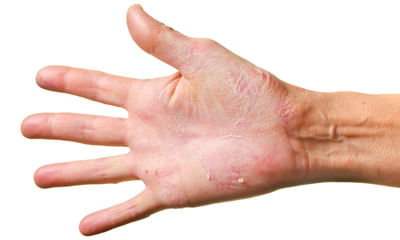
Fungal infection or Ring worm. When occurs in groin, called as jock itch. Usually fungal infection is common in moist areas of body like skin folds. It's mostly circular or round in appearance. May be red or black in colour. Treatment depending on the type and severity. Avoid sharing clothes, towels and soap; sweating also increases it. As it has to be differentiated from eczema and infection, its a must to see and confirm the diagnosis for proper treatment. So, please send photos of the affecte...more
Asked for male, 42 years old from Ahmedabad
Share
Bookmark
Report

please show to a doctor to look for cause of pain. Azithromycin is given only in certain specific conditions of the eye.
85 people found this helpful
Health Query
Share
Bookmark
Report


Varicose vein is common in pregnancy. Unfortunately, there is no permanent cure now. it usually resolves after delivery. You should you compression stocking because it causes comfort and the vein blood flow becomes better. However, in few cases, the varicose vein may increase the risk of blood clotting (thrombosis). Therefore, depending on your weight and other risk factors of clotting (family history, previous medical disease etc), you may need some injection (heparin) to prevent blood clot. B...more
159 people found this helpful
Health Query
Share
Bookmark
Report


Also known as spots or zits, pimples are a part of acne. They are most likely to occur around puberty, but they can happen at any age. During puberty, hormone production changes. This can cause the sebaceous glands, located at the base of hair follicles, to become overactive.These factors can trigger or aggravate acne: Hormones. Androgens are hormones that increase in boys and girls during puberty and cause the sebaceous glands to enlarge and make more sebum. Hormonal changes related to pregnanc...more
70 people found this helpful
Health Query
Share
Bookmark
Report


Take homoeopathic medicine
nux vomica 200 one dose. See if it helps. Or consult for proper homoeopathic treatment.
nux vomica 200 one dose. See if it helps. Or consult for proper homoeopathic treatment.
15 people found this helpful
Health Query
Share
Bookmark
Report


These factors can trigger or aggravate acne: hormones, certain medications, diet, stress.
To prevent pimples, eat fresh fruits, green vegetables, drinking plenty of water should be an essential part of your routine and intake of oily fried foods, an excess of sugar-salt should be avoided.
Don't peal pimples, as they tend to leave scars.
Stop using soap on face. Instead take a spoon of milk, add a pinch of turmeric (haldi). Mix n apply on face with the help of cotton. Leave for a few ...more
To prevent pimples, eat fresh fruits, green vegetables, drinking plenty of water should be an essential part of your routine and intake of oily fried foods, an excess of sugar-salt should be avoided.
Don't peal pimples, as they tend to leave scars.
Stop using soap on face. Instead take a spoon of milk, add a pinch of turmeric (haldi). Mix n apply on face with the help of cotton. Leave for a few ...more
Asked for male, 14 years old from Bokaro
Share
Bookmark
Report


Scarlet fever is usually treated with a 10-day course of antibiotics. This is often in the form of penicillin or amoxicillin tablets, although liquid may be used for young children. For people who are allergic to penicillin, alternative antibiotics such as erythromycin can be used instead.
99 people found this helpful


Ask a free question
Get FREE multiple opinions from Doctors
posted anonymously